Your Google Analytics shows your last-click channel got 100 conversions. That channel is your hero. You assume they drive all 100 conversions. Reality is different.
Last-click attribution credits the channel where the final click occurred. Someone searches Google, clicks your paid search ad, buys. Google Analytics credits paid search with the conversion. But that customer probably saw your brand three times before buying—Instagram ad, Facebook ad, then Google search. All three channels contributed. Last-click attribution credits only paid search.
This misallocation wastes your budget. You kill Instagram and Facebook campaigns thinking they do not drive results. You increase paid search because it “gets credit.” But paid search is not driving the conversion alone.
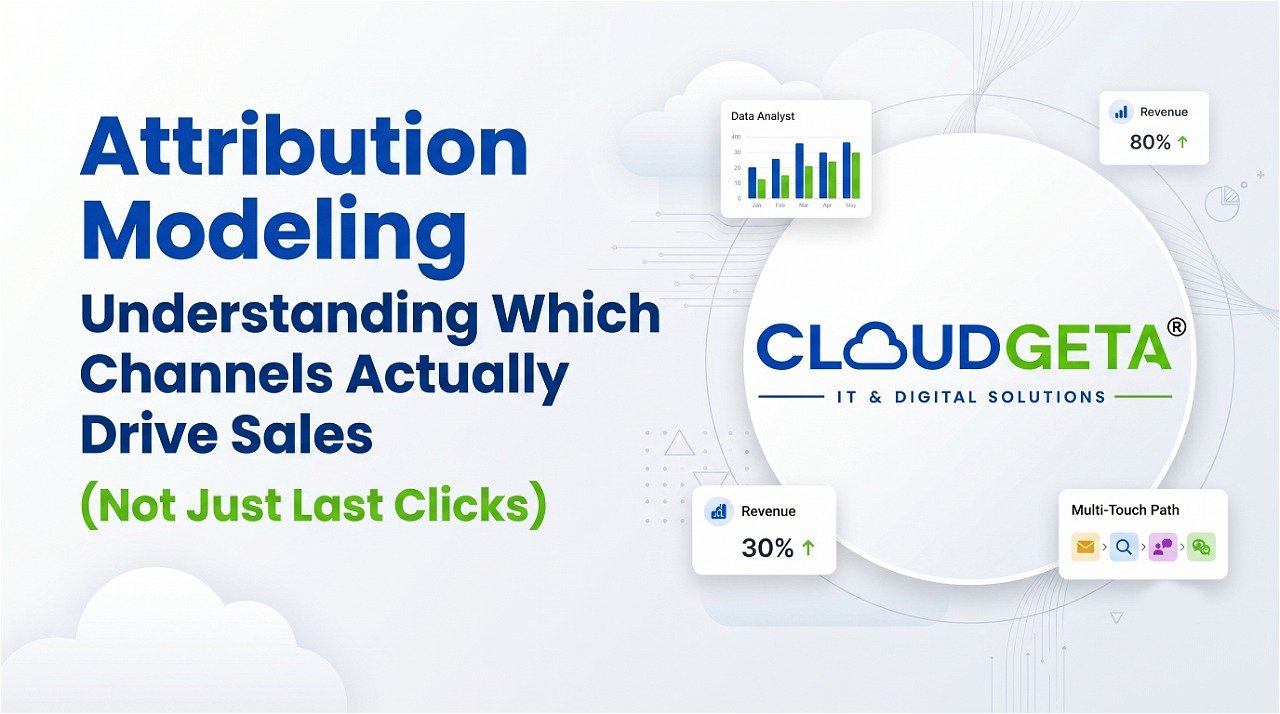
Attribution modeling solves this. Attribution models credit all the touchpoints that led to a conversion, not just the last one.
Last-click attribution credits only the final channel. Good for understanding what drives immediate conversion but misleading overall.
First-click attribution credits the discovery channel. Good for understanding what creates awareness but misleading for understanding the conversion path.
Linear attribution splits credit equally across all touchpoints. Every channel gets equal credit.
Time-decay attribution credits channels closer to conversion more heavily. Instagram saw the customer first and gets 10% credit. Email saw the customer last before purchase, gets 40% credit. Google search gets 50%.
Data-driven attribution uses machine learning to credit channels based on actual impact. This is most accurate if you have sufficient conversion volume.
Different models are useful for different questions. Use first-click to understand awareness channels. Use time-decay to understand conversion funnel. Use data-driven for comprehensive attribution.
At CloudGeta, we implement proper attribution modeling so you understand which channels actually drive conversions and allocate budget accordingly.